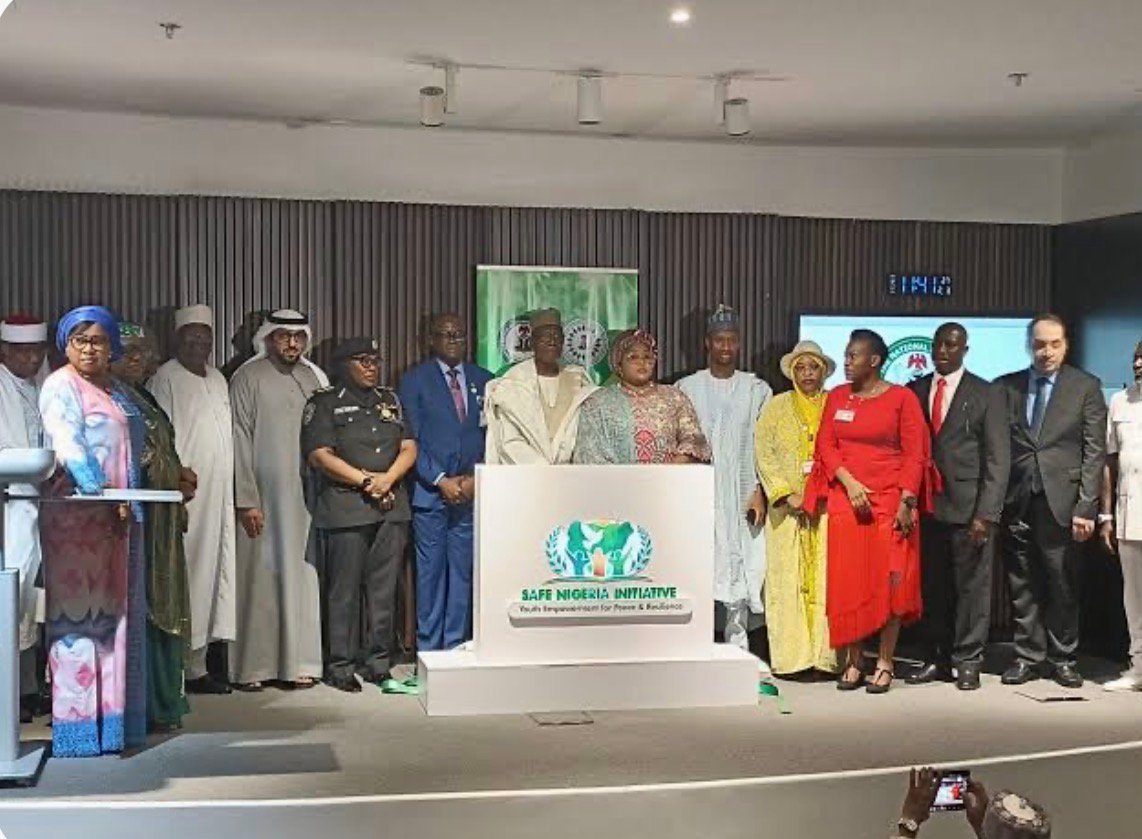
FG launches Safe Nigeria Initiative, targets 11,000 youths nationwide
The Federal Government has launched the Safe Nigeria Initiative, a nationwide youth empowerment and humanitarian skills programme designed to tackle insecurity by addressing its underlying socio-economic drivers.
Also known as Youth Empowerment for Peace and Resilience, the initiative was unveiled on Tuesday at the National Counter Terrorism Centre under the Office of the National Security Adviser in Abuja. The programme is being coordinated by the National Counter Terrorism Centre in collaboration with the Office of the Senior Special Assistant to the President on Humanitarian Affairs and Poverty Reduction.
Speaking at the launch, the National Coordinator of the National Counter Terrorism Centre, Major General Adamu Laka, said the initiative was structured to complement conventional security operations by prioritising prevention, inclusion, and economic opportunity. He explained that the programme targets no fewer than 11,000 vulnerable youths drawn from all 36 states and the Federal Capital Territory.
According to Laka, insecurity in Nigeria is often a manifestation of deeper challenges such as poverty, unemployment, trauma, and social exclusion, stressing that sustainable peace cannot be achieved through force alone. He said the Safe Nigeria Initiative aims to bridge humanitarian response and national security by equipping at-risk youths with vocational skills, livelihoods support, psychosocial services, and civic education. He added that economically productive and socially included youths are far less likely to be drawn into crime or violent extremism, noting that community resilience remains central to national security.
Also speaking, the Senior Special Assistant to the President on Humanitarian Affairs and Poverty Reduction, Mrs Delu Yakubu, said the programme aligns with President Bola Tinubu’s Renewed Hope Agenda. She described the initiative as a shift toward people-centred, non-kinetic security responses that place emphasis on skills development, economic empowerment, and social cohesion. Yakubu said the programme would provide vocational training, entrepreneurial support, peace-building education, and psychosocial care, particularly for youths in vulnerable and conflict-affected communities.
In his remarks, the Minister of Budget and Economic Planning, Senator Atiku Bagudu, said Nigeria’s youthful population remains one of its greatest strengths, but noted that this advantage can only be realised through deliberate and sustained investment in skills development. He said skills acquisition is critical to addressing unemployment, insecurity, and economic competitiveness, adding that a skilled population serves not only as an economic asset but also as a foundation for inclusion, resilience, and long-term national stability under the Renewed Hope Agenda.
The Director-General of the Nigeria Governors’ Forum, Abdulateef Shittu, said the initiative reflects a shared understanding among federal and state actors that lasting security cannot be achieved through force alone. He assured that state governments would support the programme’s implementation through community engagement and coordination, describing youth empowerment as both a social development priority and a national security necessity that requires a whole-of-government and whole-of-society approach.
The Safe Nigeria Initiative is expected to strengthen youth participation in productive economic activities while reducing vulnerability to crime and violent extremism, positioning skills development and livelihoods support as critical tools in Nigeria’s broader security and development strategy.
Laka added that economically-productive and socially- included youths were far less likely to be recruited into crime or violent extremism, stressing that community resilience remained central to national security.
Also speaking, the Senior Special Assistant to the President on Humanitarian Affairs and Poverty Reduction, Mrs Delu Yakubu, said the programme aligned with President Bola Tinubu’s Renewed Hope Agenda.
Yakubu described the initiative as a major shift toward people-centred, non-kinetic security responses that prioritised skills development, economic empowerment and social cohesion.
She said that the programme would provide vocational training, entrepreneurial support, peace-building education and psycho-social care for youths, particularly those in vulnerable and conflict-prone communities.
In his remarks, the Minister of Budget and Economic Planning, Sen. Atiku Bagudu, said Nigeria’s youthful population remained one of its greatest strengths.
Bagudu, however, said that the advantage could only be realised through deliberate and sustained investment in skills development.
According to him, skills acquisition is central to addressing unemployment, insecurity and economic competitiveness.
He noted that a more skilled population was not only an economic asset but also a strategic tool for inclusion, resilience and long-term national stability, in line with Tinubu’s Renewed Hope Agenda.
Also, the Director-General, Nigeria Governors’ Forum (NGF), Abdulateef Shittu, said the initiative was a reflection of a shared understanding that lasting security could not be achieved through force alone, but through prevention, inclusion and opportunity.
Shittu assured of state governments’ support for the implementation of the programme through community engagement and coordination.
He described youth empowerment as not just a social policy priority but a national security imperative requiring a whole-of-government and whole-of-society approach