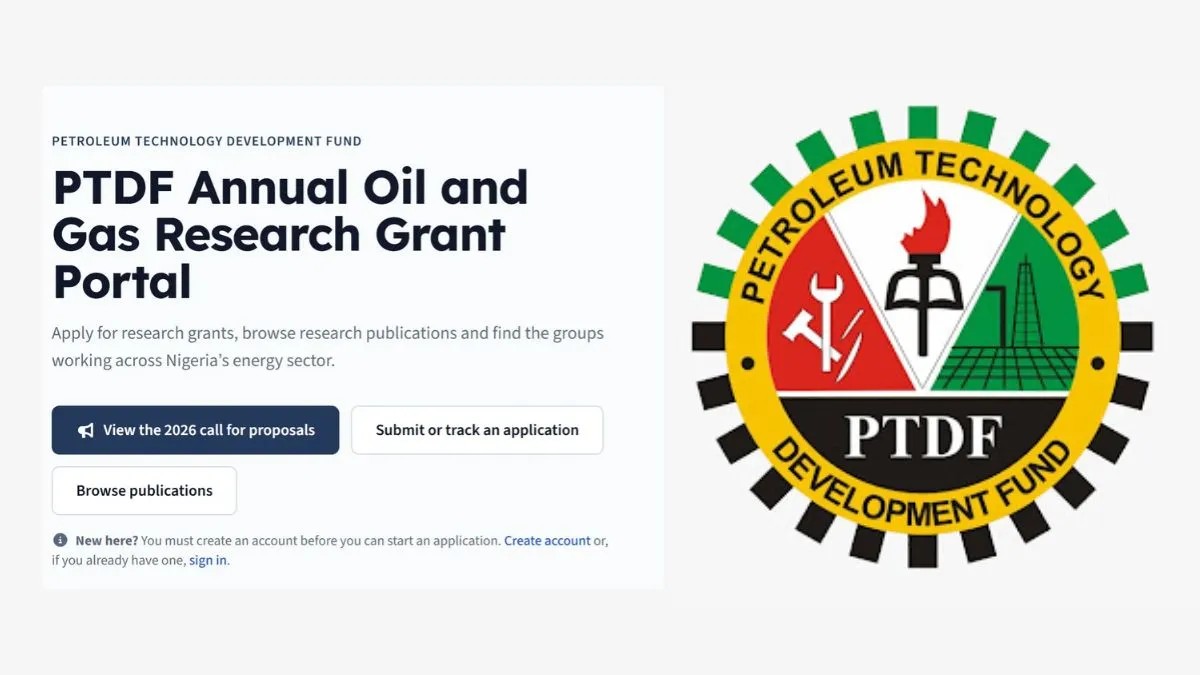
PTDF Annual Oil and Gas Research Grant Competition 2026/2027 for Nigerian Researchers
PTDF Annual Oil and Gas Research Grant Competition 2026/2027 for Nigerian Researchers
Organisation: Petroleum Technology Development Fund (PTDF)
Programme: Annual Oil and Gas Research Grant Competition
Host Country: Nigeria
Eligible Applicants: Nigerian researchers residing in Nigeria
Grant Type: Research Funding
Maximum Project Duration: 24 Months
Application Deadline: 10 February 2027
The Petroleum Technology Development Fund (PTDF) is inviting qualified Nigerian researchers to submit research proposals for its Annual Oil and Gas Research Grant Competition.
The initiative is designed to strengthen indigenous research capacity and support the development of innovative technological solutions to real challenges facing Nigeria’s oil and gas industry.
The programme aims to promote research, technological advancement, industry collaboration, and the practical application of research findings within Nigeria’s petroleum sector.
Eligibility Requirements
To be eligible for the competition, applicants must meet the following requirements:
- Must be Nigerian citizens residing in Nigeria.
- Must be working in an academic institution, company, research organisation, or non-governmental organisation.
- The Principal Researcher should be a senior academic.
- Collaboration with industry stakeholders is strongly encouraged.
- Collaboration with Nigerians living abroad is welcome, provided the Principal Researcher resides in Nigeria.
- Multidisciplinary research teams are advantageous.
Research Themes for the 2026 Cycle
Research proposals must address relevant challenges within one or more of the following themes:
1. Energy Security, Basin Development and Subsurface Excellence
- AI-driven seismic imaging and basin modelling.
- Frontier-basin viability and deepwater systems.
- Digital twins and source-rock modelling.
2. Sustainable Production, Enhanced Oil Recovery and Asset Integrity
- Smart wells and predictive maintenance.
- Enhanced oil recovery technologies.
- Flow assurance, corrosion control, and pipeline integrity.
- Robotics and mechatronics.
3. Gas Commercialisation, Utilisation and Flare Reduction
- Gas-to-power and gas-to-chemicals.
- Mini-LNG, CNG, LPG and petrochemical processing.
- Gas flare reduction and monetisation.
- Carbon capture, utilisation and storage in gas value chains.
4. Integrated Technologies, Renewables and Low-Carbon Solutions
- Solar PV and hybrid gas-renewable systems.
- Offshore wind and battery storage.
- Blue and green hydrogen.
- Geothermal and waste-to-energy technologies.
5. Environmental Sustainability, Circular Economy and ESG
- Bioremediation and environmental cleanup.
- Produced-water treatment and methane reduction.
- Carbon accounting and digital ESG systems.
- Waste valorisation, biodiversity and oil-spill remediation.
- Host-community development and empowerment.
6. Digital Oilfield, Automation and Emerging Technologies
- Artificial intelligence and machine learning applications.
- Industrial Internet of Things (IIoT).
- Robotics for inspection and drilling.
- Cybersecurity, cloud-edge systems and autonomous operations.
- Digital twins, blockchain and generative AI.
7. Facilities Engineering, Infrastructure, Local Content and Industrial Systems
- Reliability engineering and integrated facility management.
- Brownfield retrofits and energy-efficient operations.
- Local fabrication and additive manufacturing.
- Import substitution, supply-chain and logistics systems.
8. Energy Economics and Finance, Fiscal Systems, Policy Analytics and Human Capital Development
- Oil price volatility and macroeconomic policy evaluation.
- Petroleum Industry Act (PIA) modelling.
- Investment optimisation and gas fiscal frameworks.
- Energy-market forecasting and carbon markets.
- Green finance, stranded-asset risk and workforce development.
Benefits of the Research Grant
Successful proposals will receive research grants to support approved projects.
- Funding will be released in instalments based on project milestones.
- Projects can run for a maximum period of 24 months.
- Researchers will have the opportunity to develop practical solutions to challenges in Nigeria’s oil and gas industry.
- The programme encourages collaboration between academic researchers and industry stakeholders.
Research Proposal Requirements
Applicants are expected to submit a properly structured research proposal containing the following sections:
- Cover Page – Research theme and project title.
- Executive Summary – Industry problem, proposed solution, commercialisation pathway and expected impact.
- Background and Problem Definition.
- Literature Review and Gap Analysis.
- Research Objectives.
- Methodology.
- Research Plan and Timeline, including a Gantt chart.
- Commercialisation and Adoption Plan.
- Research Budget and Justification.
- Capacity-Building Components.
- References.
- Tables and Figures.
- Appendices.
- Formatting and submission requirements.
Proposal Formatting Guidelines
- Maximum word count: 5,000 words.
- Font: Times New Roman, size 12.
- Line spacing: 1.5.
- Margins: 2.54 cm on all sides.
- Referencing style: APA 7th Edition.
- Citations and references should use recent and relevant literature.
- Personal and institutional identifiers, including names and logos, must not appear in submitted proposals.
- Tables and figures should be separated from the main text and submitted according to the portal’s sectional format.
Selection Process
A team of academic and industry experts will assess submitted proposals. Shortlisted applicants may be invited to make oral presentations.
Proposals will be evaluated based on criteria including:
- Industry relevance and problem definition.
- Research novelty and gap analysis.
- Clarity of objectives.
- Methodology and technical merit.
- Research plan and timeline.
- Commercialisation and adoption strategy.
- Budget and value for money.
- Research team and institutional capacity.
Application Deadline
10 February 2027
Related Posts
Climate Intervention Environmental Impact Fund (CIEIF) Grant 2026
Africa Youth Climate Fund (AYCF) Grants 2026/2027 for Youth-Led Climate Organisations in Africa
How to Apply
Interested and eligible Nigerian researchers should create an account on the official PTDF Annual Oil and Gas Research Grant Portal before starting an application.
Applicants who already have accounts can sign in and submit their research proposals through the portal.